



Academicians Lead National Science Popularization Month Outreach, Sparking Public Interest in Science
Author: Jiang Xiaodan
Date: September 30, 2025
Source: People's Daily
During the first National Science Popularization Month, academicians from the Chinese Academy of Sciences and the Chinese Academy of Engineering actively participated in science outreach activities. They visited government agencies, schools, and enterprises, or used online platforms to deliver diverse and engaging science content to the public. As influential figures in science communication, these academicians have played a key role in inspiring public interest in science and exploration.
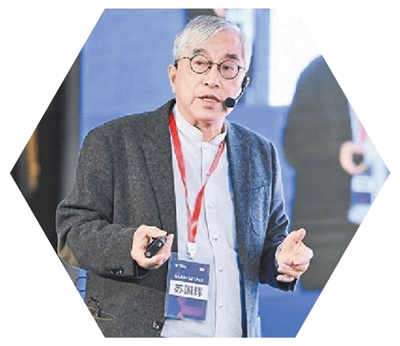
Su Guohui, an academician of the Chinese Academy of Sciences and a professor at Jinan University, recently shared insights into his research and science communication efforts in an exclusive interview. Specializing in the development, plasticity, and regeneration of the mammalian visual system, Su achieved a breakthrough in 1985 by successfully regenerating long-distance axons in retinal ganglion cells of adult mammals through peripheral nerve transplantation.
In recent years, Su and his team have focused on "nerve injury repair," addressing the challenge of regenerating damaged central nerves in clinical settings. By modifying the microenvironment of the optic nerve, the team has successfully stimulated nerve regeneration in animal studies and is now preparing to advance to clinical trials.
Su began his science outreach work about six or seven years ago, tailoring his content to different audiences over time. He often shares his research experiences with primary and secondary school students, emphasizing that scientific progress is a gradual process of exploration rather than an overnight achievement. He encourages young learners to stay curious and resilient. In recent years, he has also incorporated mental health topics into his talks, recommending strategies such as physical exercise, light therapy, and social interaction to help adolescents manage emotions.
According to Su, science communication aims to ignite interest and help students realize that science is not an abstract concept, but a practical tool for solving real-world problems. It also helps promote the spirit of scientific inquiry, highlighting the value of persistence and breakthroughs. Reflecting on a visit to South China Normal University Affiliated Primary School, he recalled a student asking how exercise improves academic performance. Su explained that physical activity stimulates the release of neurotrophic factors, which enhance learning efficiency—a moment that made him feel science had truly come alive for the young audience.
Su expressed his commitment to continuing his science outreach work, hoping to "plant the seeds of scientific dreams in the hearts of more people."
NEWS
- About the University
- Quick Links

Copyright © 2016 Jinan University. All Rights Reserved.